

Our Range of Rooftop Tents
Choosing the right Tent for you:
If you are looking for a comfortable and convenient way to camp on your car roof, you might be wondering which type of rooftop tent is best for you. There are three main types of rooftop tents: hard-shell, soft-shell, and 12V electric. Each type has its own features and advantages, depending on your needs and preferences. Here is a brief overview of each type and what they offer:
Soft-Shell Tents
Soft-shell rooftop tents are the most traditional and affordable type of rooftop tents. They have a canvas or polyester fabric that covers the tent frame and folds into a bag when not in use. They usually require manual setup, which involves unfolding the tent, securing the poles, and attaching the ladder. Soft-shell rooftop tents are ideal for occasional campers who want a spacious and versatile tent that can accommodate more people and gear.
Some of the advantages of soft-shell rooftop tents are:
- They are more budget-friendly than hard-shell rooftop tents
- They offer more headroom and sleeping space
- They can be expanded with an annex or an awning for an extra living area
- They can be customized with different colors, windows, and accessories
- They can fit on most roof racks and vehicles
Hard-Shell Tents
Hard-shell rooftop tents are the most durable and easy to set up. They have a rigid shell that protects the tent from weather and damage and can be popped up in seconds with a simple mechanism. Some hard-shell rooftop tents, such as the Dometic TRT120E, can even be operated with a remote control and a 12V power source. Hard-shell rooftop tents are ideal for frequent travelers who value speed, security, and comfort. They also have a sleek and aerodynamic design that reduces wind noise and drag.
Some of the advantages of hard-shell rooftop tents are:
- They are very quick and easy to set up and pack away
- They are more resistant to rain, wind, snow, and UV rays
- They offer more insulation and ventilation
- They have a lower profile and weight than soft-shell rooftop tents
- They can be mounted on most roof racks and vehicles
12v Electric Tents
12V electric rooftop tents are the most innovative and convenient type of rooftop tents. They have an inflatable airframe that supports the tent fabric and can be inflated with a 12V power source, such as a car battery or a cigarette lighter. They can be set up in minutes with minimal effort and can be deflated and packed away in a compact bag. 12V electric rooftop tents are ideal for adventurous campers who want a hassle-free and comfortable tent that can adapt to different terrains and weather conditions.
Some of the advantages of 12V electric rooftop tents are:
- They are very easy and fast to set up and pack away
- They are more lightweight and portable than hard-shell and soft-shell rooftop tents
- They offer more stability and flexibility than rigid frames
- They can be adjusted to different air pressures and temperatures
- Ease-of-Use is unparalleled when compared to other types of rooftop tents.
Browse Soft-Shell Rooftop Tents
Browse Hard-Shell Rooftop Tents
Browse 12v Rooftop Tents
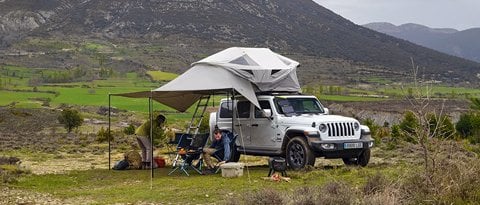
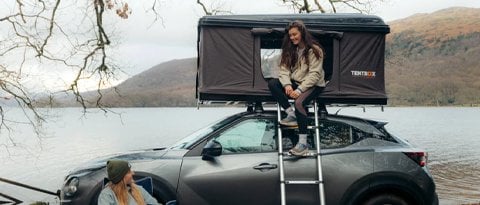

1 - Mounting your Rooftop Tent
Firstly, you’ll need a set of roof bars. Roof bars are the ones that run across your vehicle roof, from side to side.
Roof bars are available for most vehicles and have various methods of fixing to the car as you can see from the illustrations below.
All Rooftop tents will fit directly onto these bars.
Any doubts - please contact us BEFORE ORDERING for guidance and advice
All Roof Bars will install onto your vehicle through one of the following fitments:
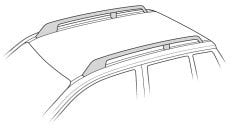
Raised Rails
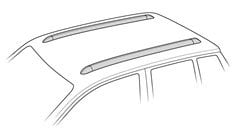
Flush Rails

Fix Point
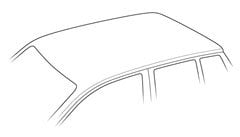
Normal Roof
Rooftop Tents ONLY support these types of fitment:
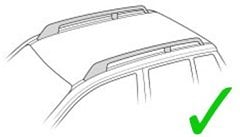
Raised Rails
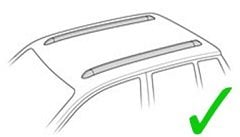
Flush Rails

Fix Point
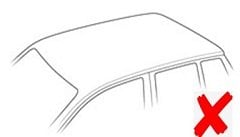
Normal Roof
Rooftop Tents WILL NOT fit vehicles that use the "clamp Style" Roof Bars. (Vehicle with a "normal" Roof) This is because the high static weight may cause damage to the roof. Its the difference between being able to open your car doors or not the following morning.
Rooftop Tents WILL NOT fit any type of Thule "Edge" roof bars (Thule Edge or Thule EVO Edge)
Rooftop Tents WILL NOT fit any type of Thule SlideBar.
DO NOT use Rooftop Tents if you have a Glass Roof on your vehicle. Cars with sunroofs may be used but the opening function should not be used.
2 - Vehicle Roof Load Limits
Roof bars are attached to the steel frame of your car, so the weight of the Rooftop Tent is spread through the strength of the vehicle.
It is important to check that your vehicle roof load limit is higher than the combined weight of the Rooftop Box and roof bars that you’re purchasing.
Dynamic vs. Static Loads
A dynamic load refers to the maximum weight allowed whilst your vehicle is moving, and the static load is when your vehicle is stationary. A vehicle can actually take much larger static loads than it can dynamic loads.
The reason for the difference is that when moving, your vehicle is turning, accelerating and braking, which all exert lateral forces on the top of your vehicle, and can make it unstable, when driving.
However, when your vehicle is stationary, only a downward force is being exerted directly into the steel frame. Vehicle frames are designed to withstand a force large enough to protect you in a crash, and to take the force of driving over bumps in the road, and changes in road gradient, when you hit them at speed.
In other words, when your vehicle is stationary, the steel frame can easily take the weight of a Rooftop Tent, as well as two or even three adults.
Your vehicle and roof rack must have a minimum dynamic (driving) weight carrying capacity of 165 lbs/75 kg. For tents weighing greater than 165 lbs/75 kg the maximum weight capacity for the rack and vehicle must be equal to or greater than the tent weight.
Recommended roof rack weight capacities can be found on the products on our website or Thule.com. Check your vehicle instruction booklet for information on recommended roof load.
Weight capacity of tent in use with people inside the tent (static weight) can exceed the dynamic weight capacity of the rack partially supported by the ladder. The tent’s static weight capacity is stated for each tent. As a guideline 3 times the stated roof rack capacity can be used in static mode (roof rack and tent included)
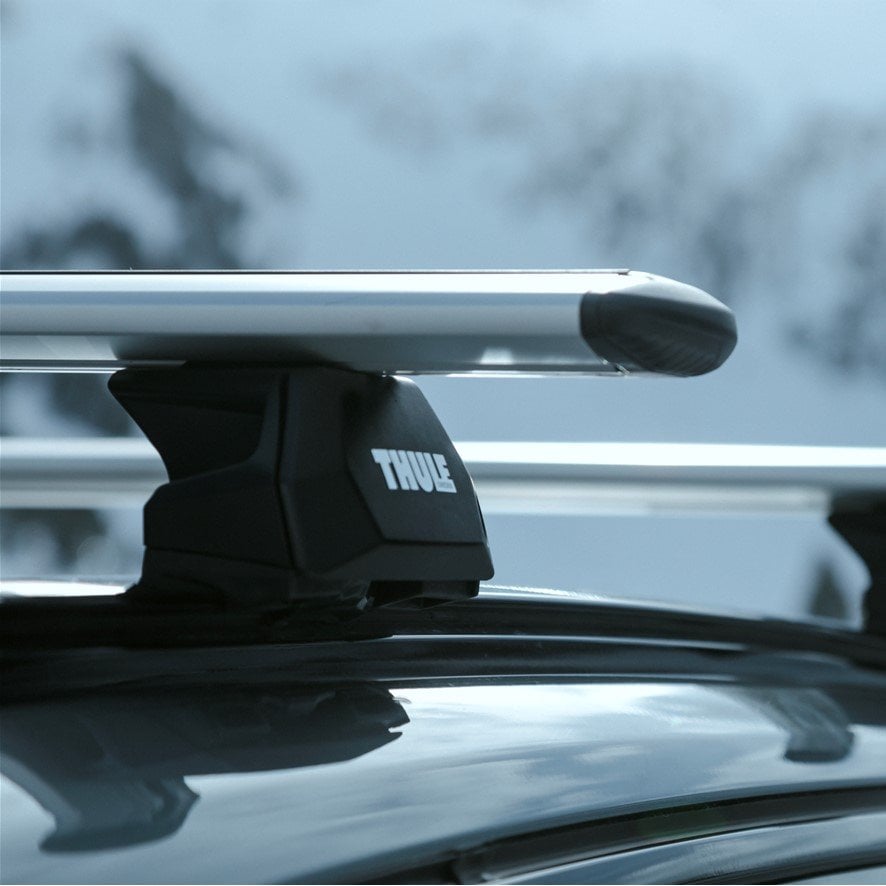
Roof Bar systems
Search our products for Thule vehicle specific roof bars.
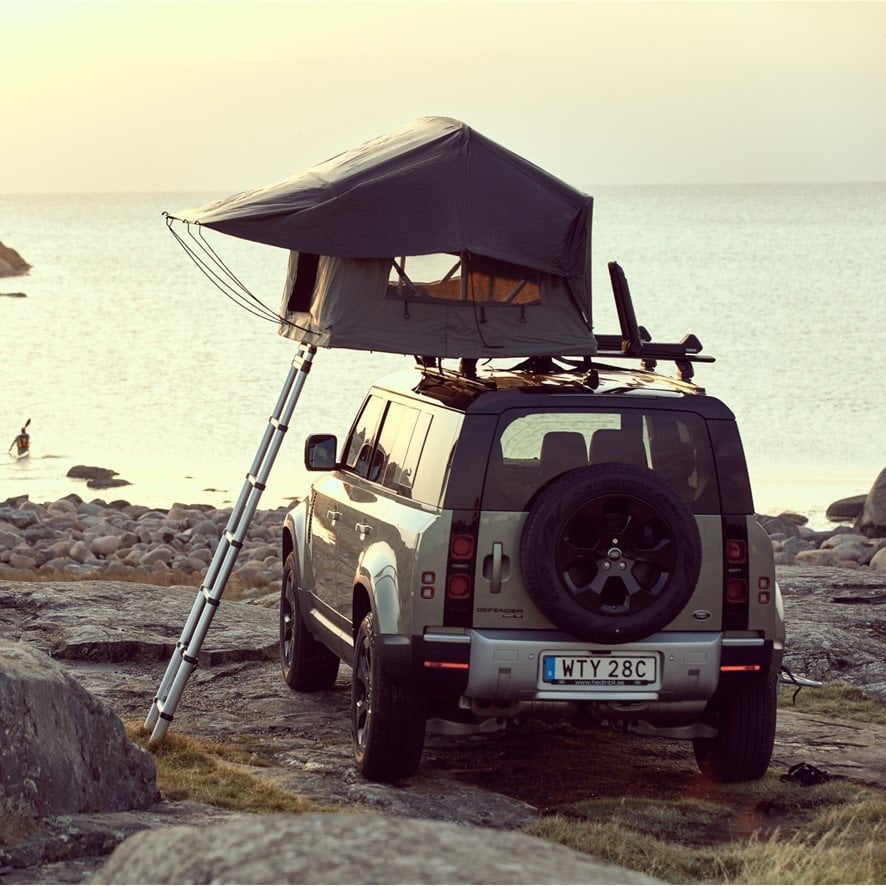
View All Rooftop Tents
View our entire range of Rooftop Tents
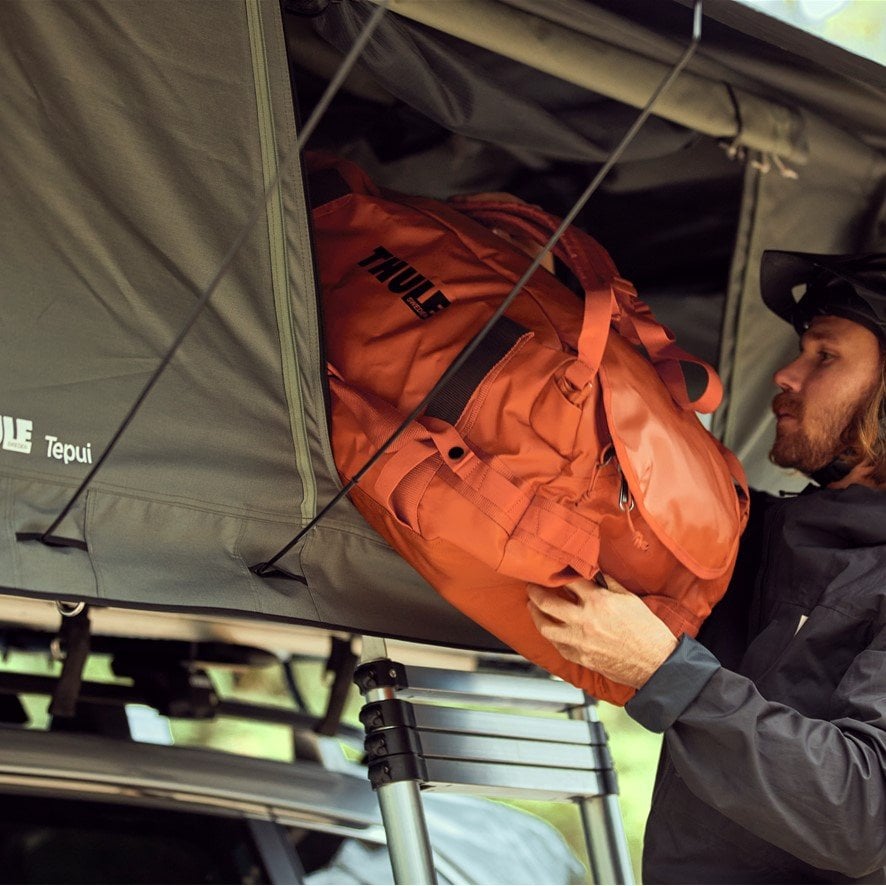
Rooftop Tents Acessories
Everything you need for a comfortable stay